Manage decisions, not agents.
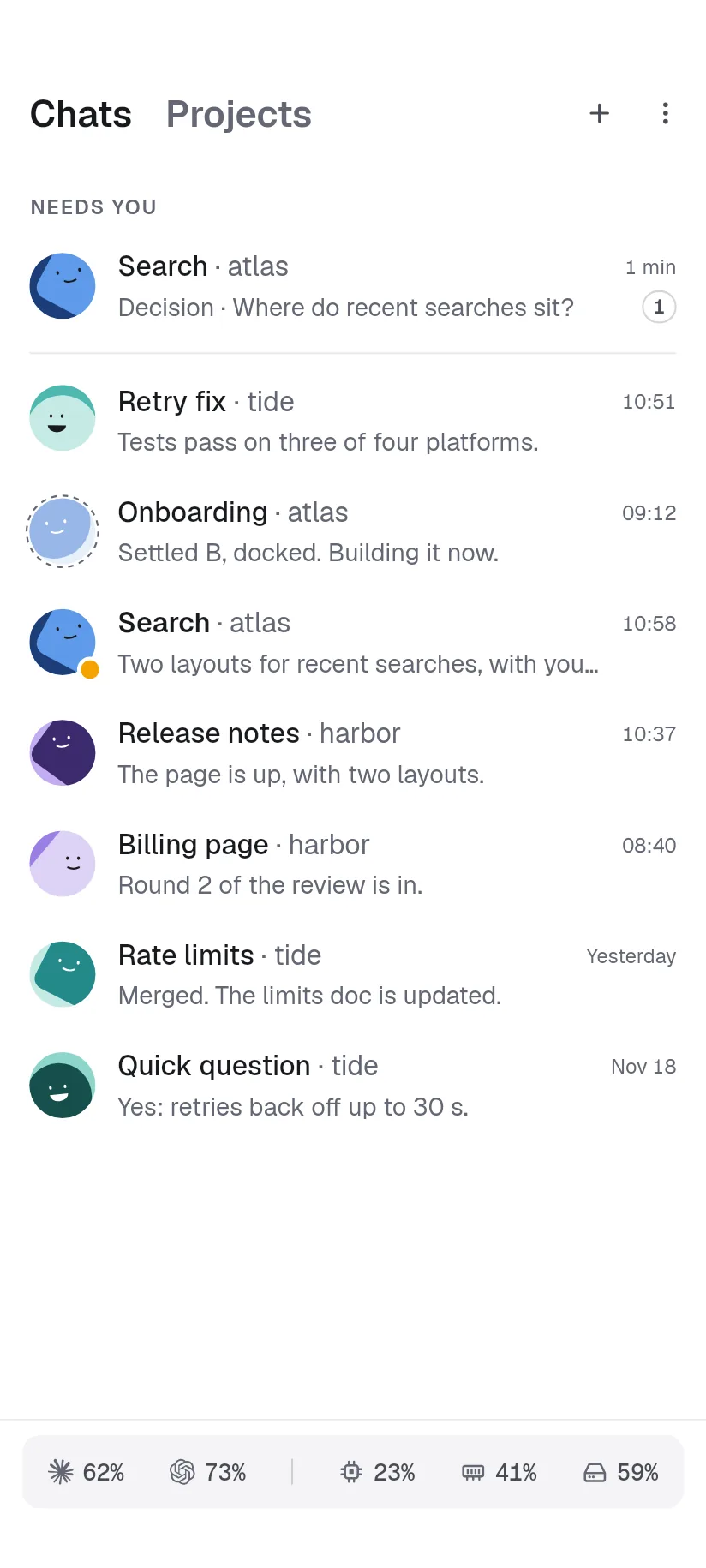
Ruddr runs your coding agents in silence and reaches you only when something waits on you: a decision to take, a design to approve, a blocker to lift.
7 days free, then from $7.99 a month
- macOS
- Windows (WSL)
- Linux
- Android
- iOS
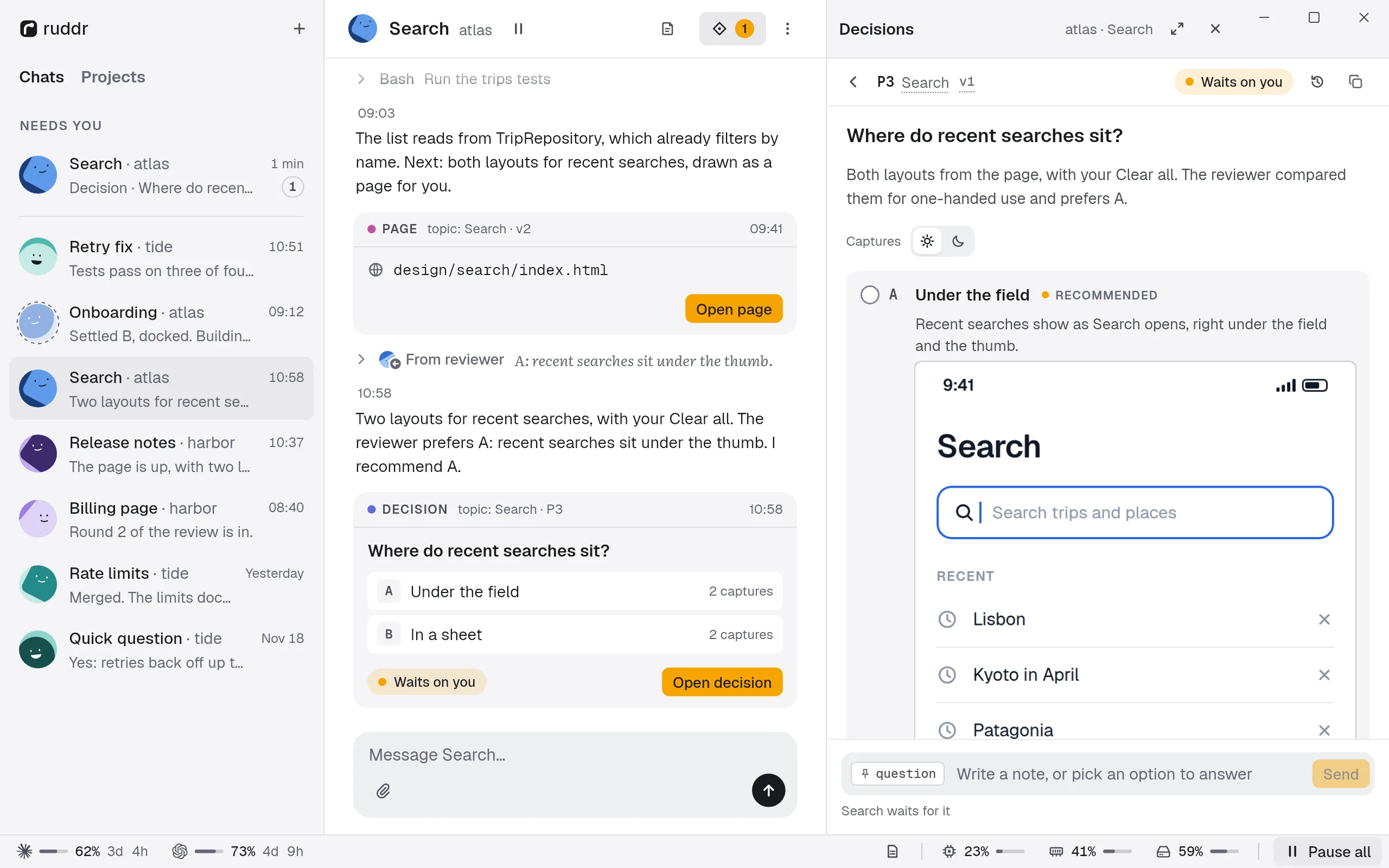
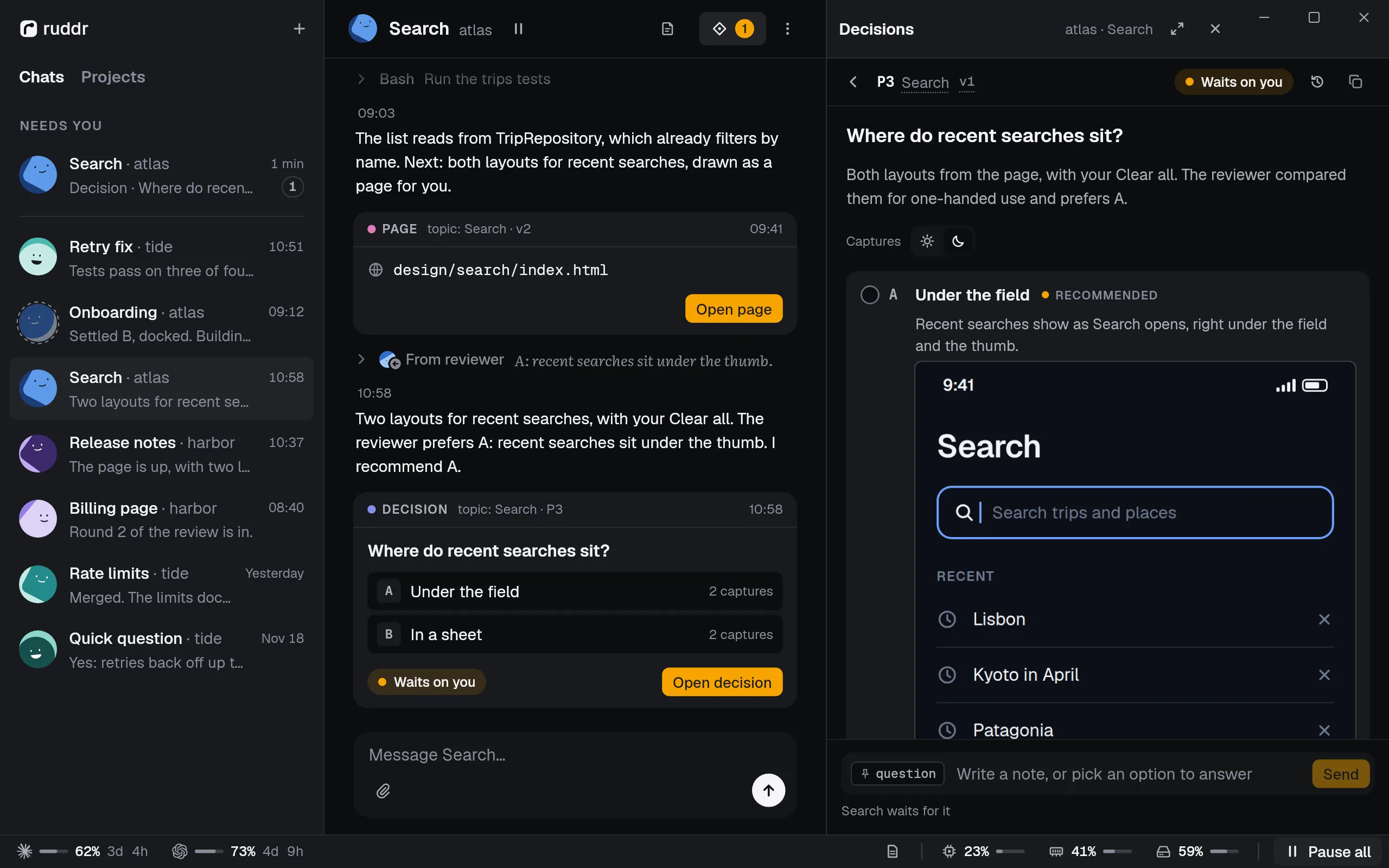
A light layer over your real CLIs.
Ruddr is a lightweight layer on top of Claude Code and Codex, as you installed them. Built on herdr-core, your agents run in the background in real terminals, signed in as you, and you can open each one directly. Close the app and they keep working; open it again and everything is where you left it.
No lock-in, and nothing left behind: your sessions stay theirs and resume anywhere, with Ruddr or without it.
Start with a message.
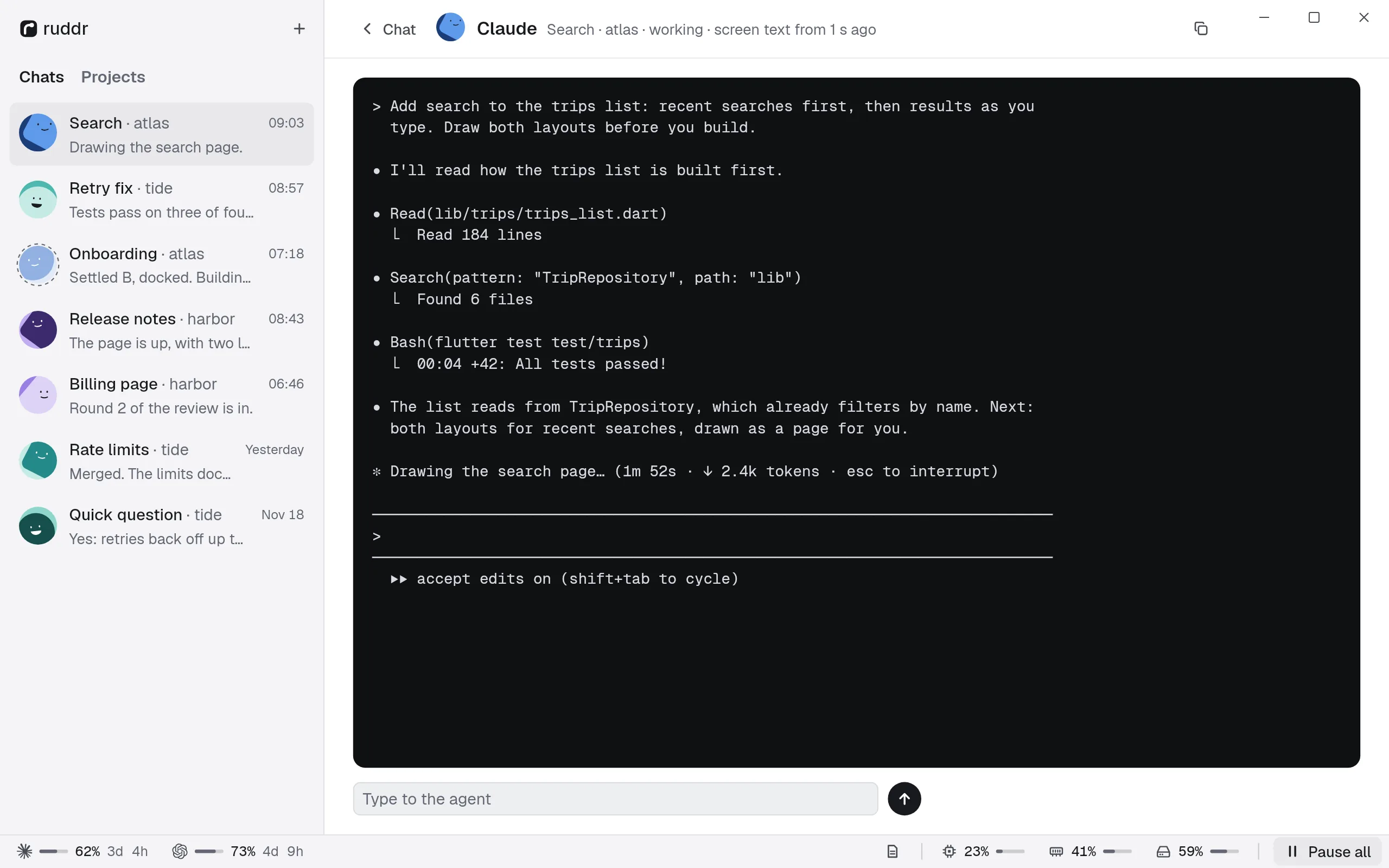
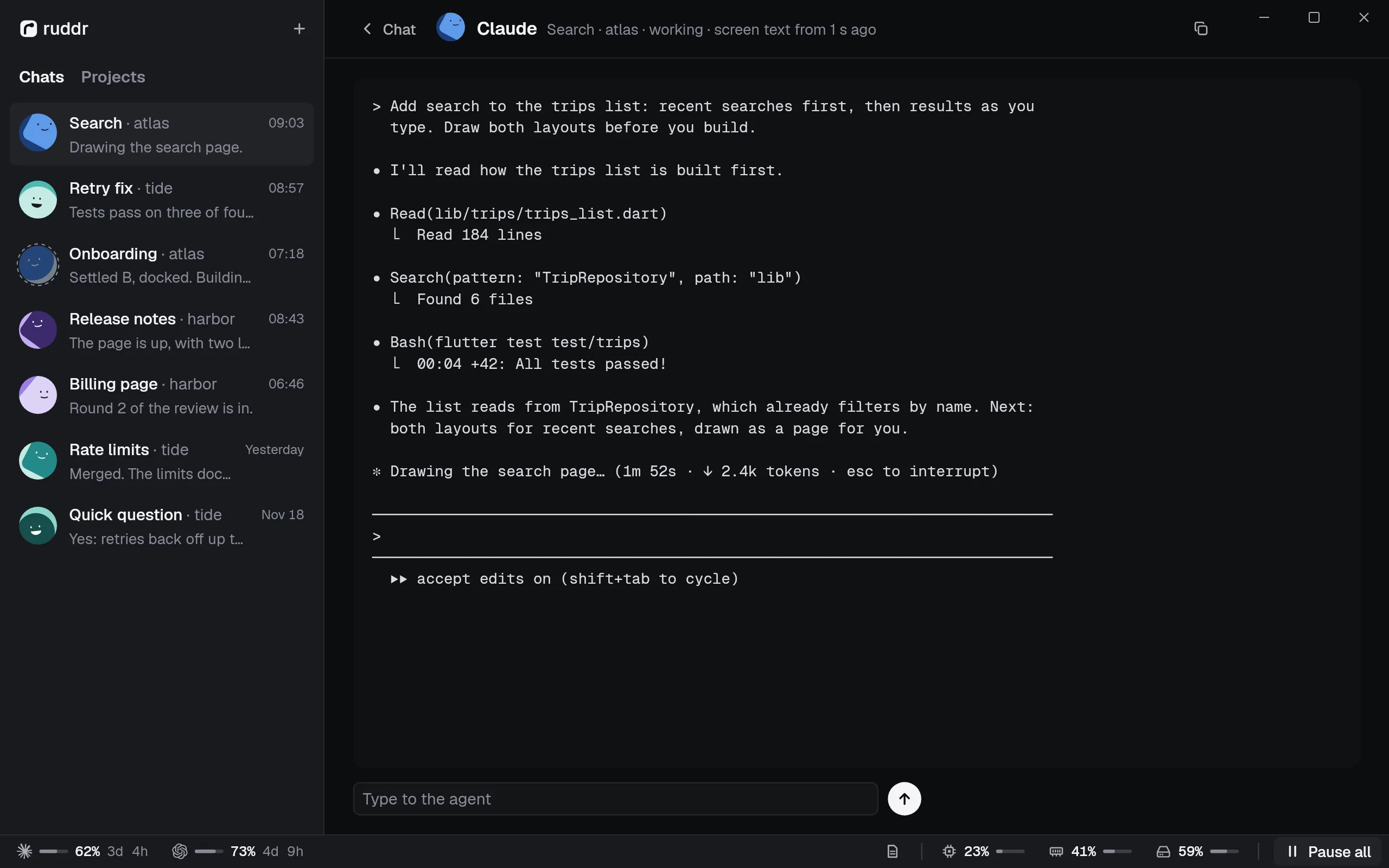
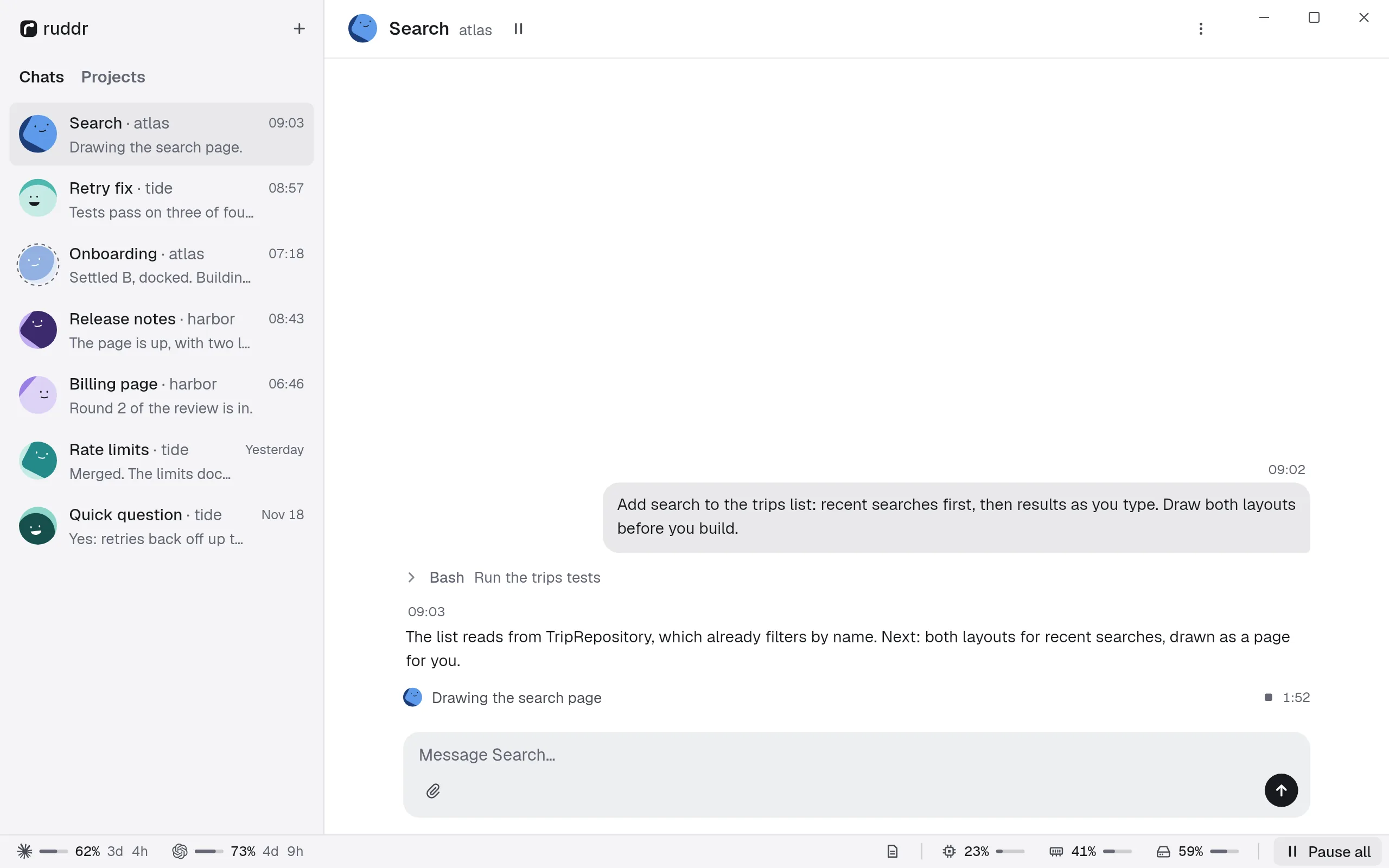
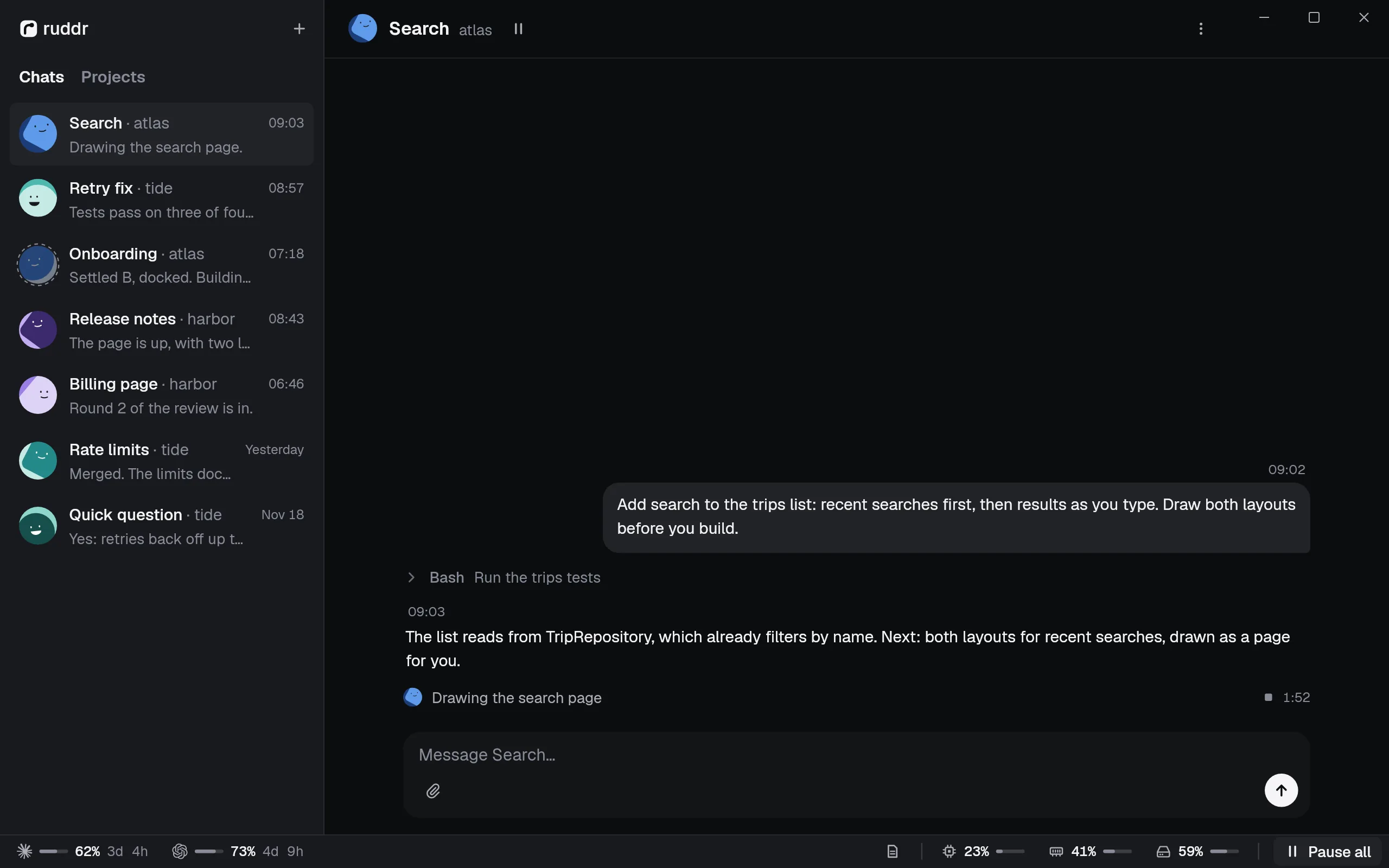
We like chats for a reason: they're a convenient entry door, and flexible in what you put through it. Here, the agent's tool calls fold into lines, its words stay readable, and how long it has been at work is in sight.
“Which of these notifications actually matter?”
Then, silence.
While agents work, nothing calls you until the task is done: not a step along the way, not a handoff between agents, not a passing test. Needs you holds only what blocks an agent, so when it's empty, nothing needs you, and nothing says so.
92% fewer pings while agents work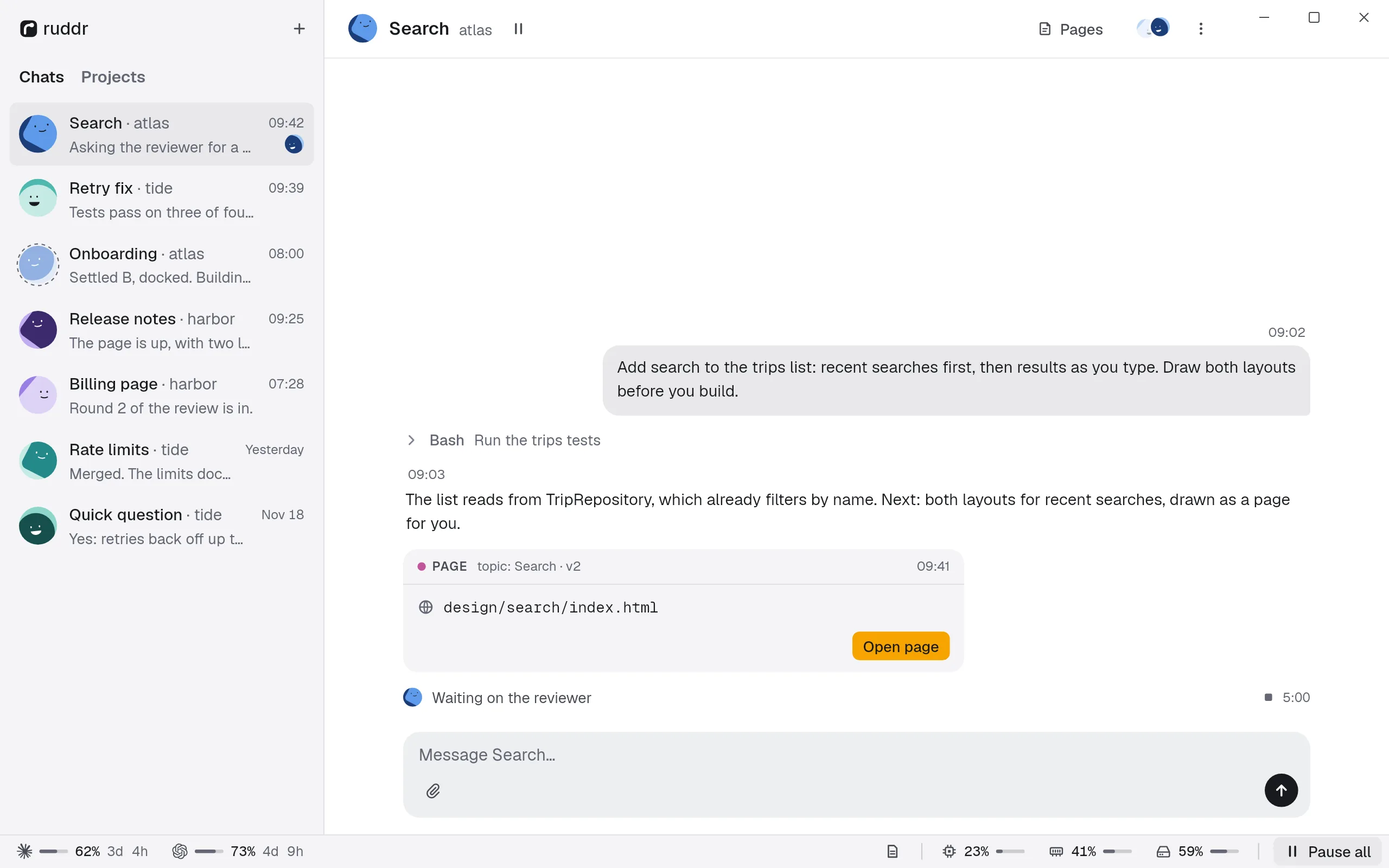
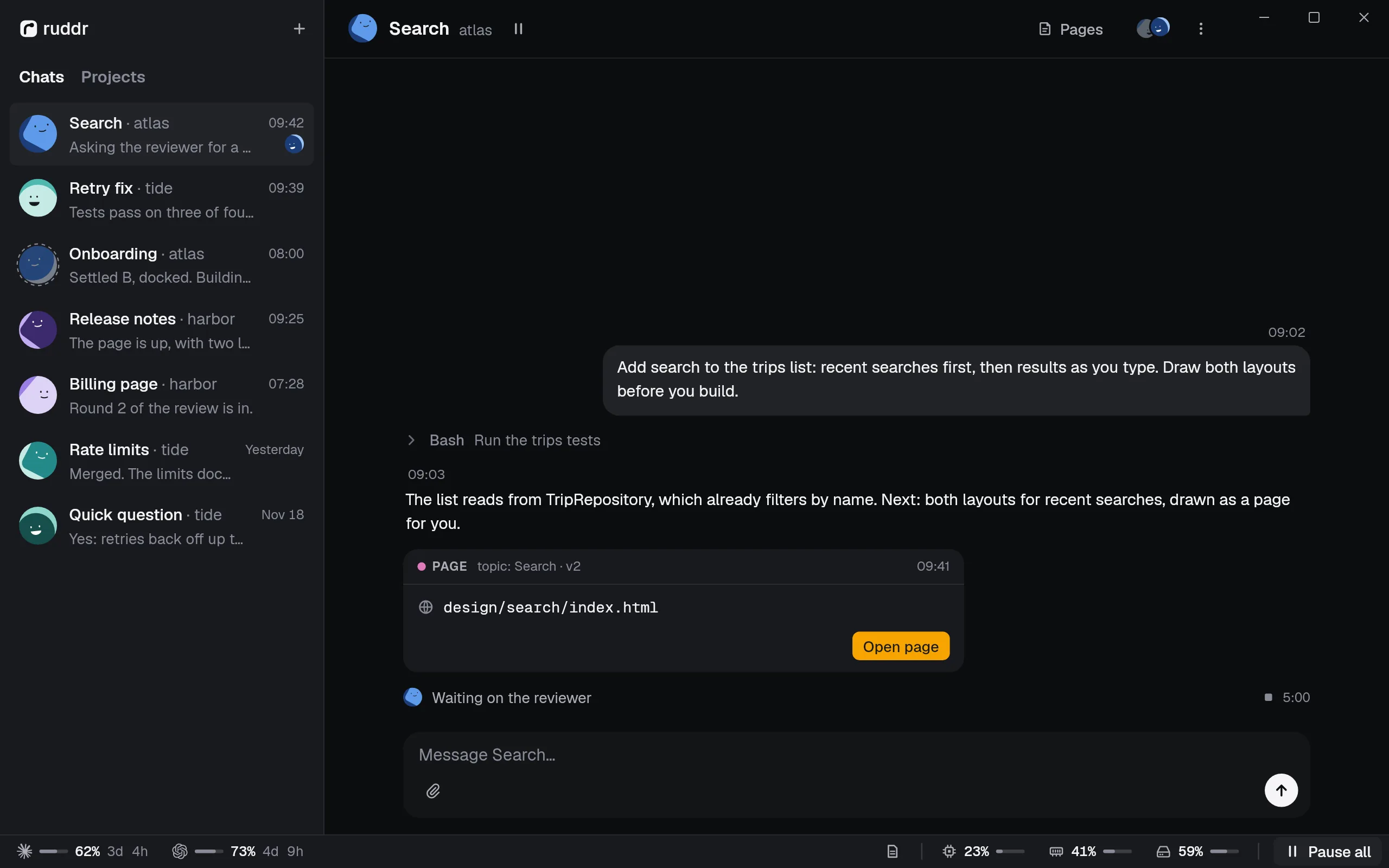
See it before it's built.
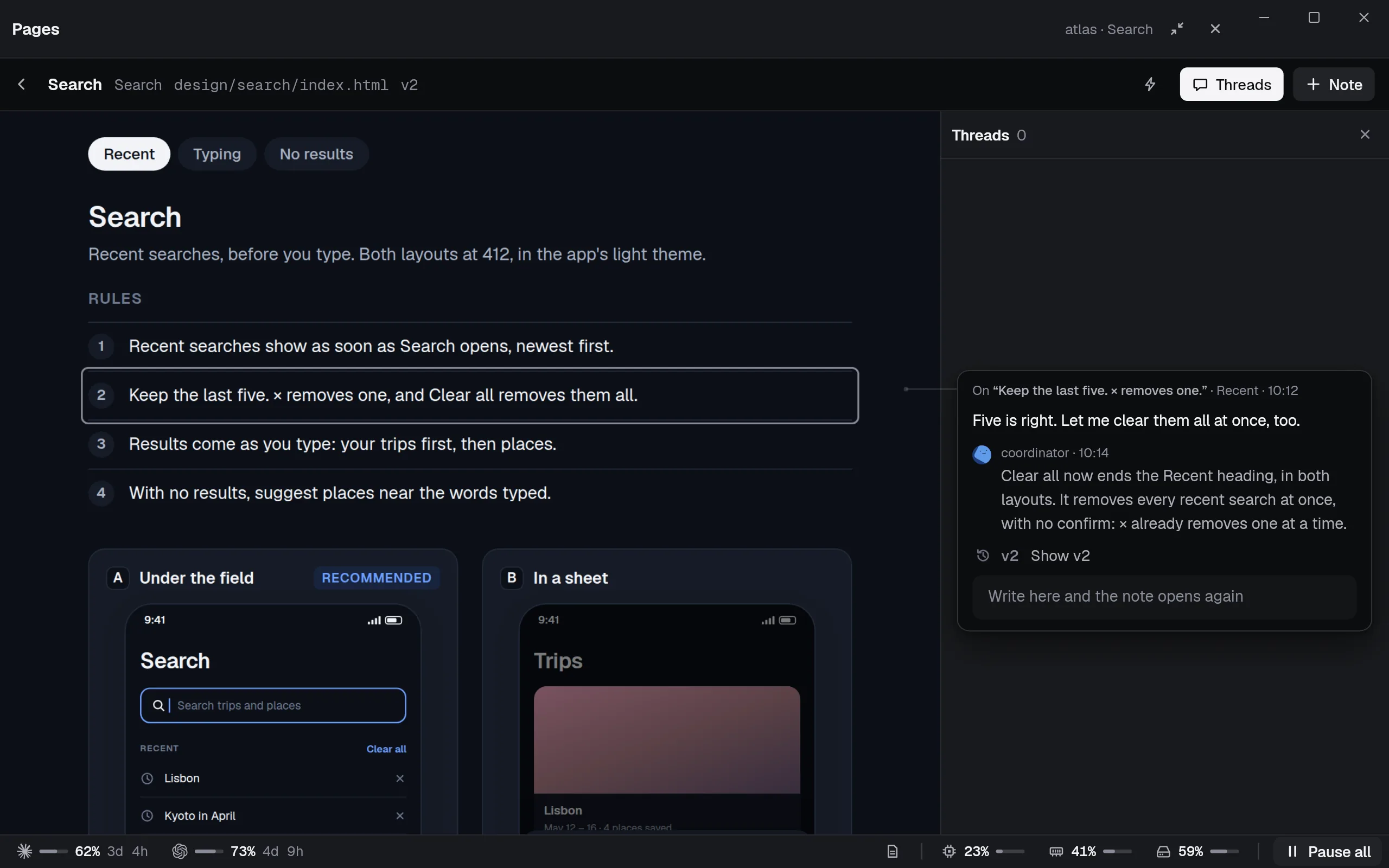
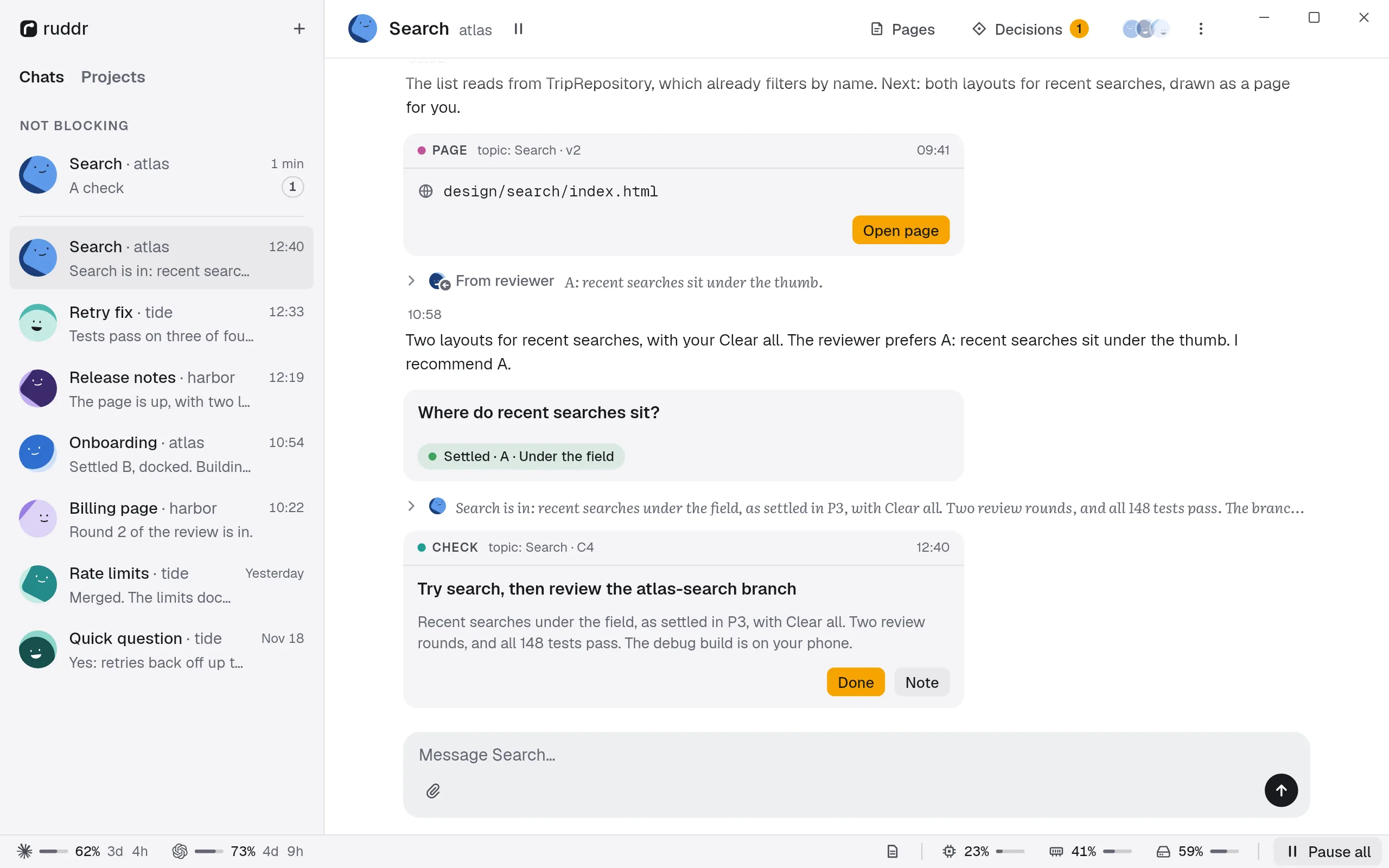
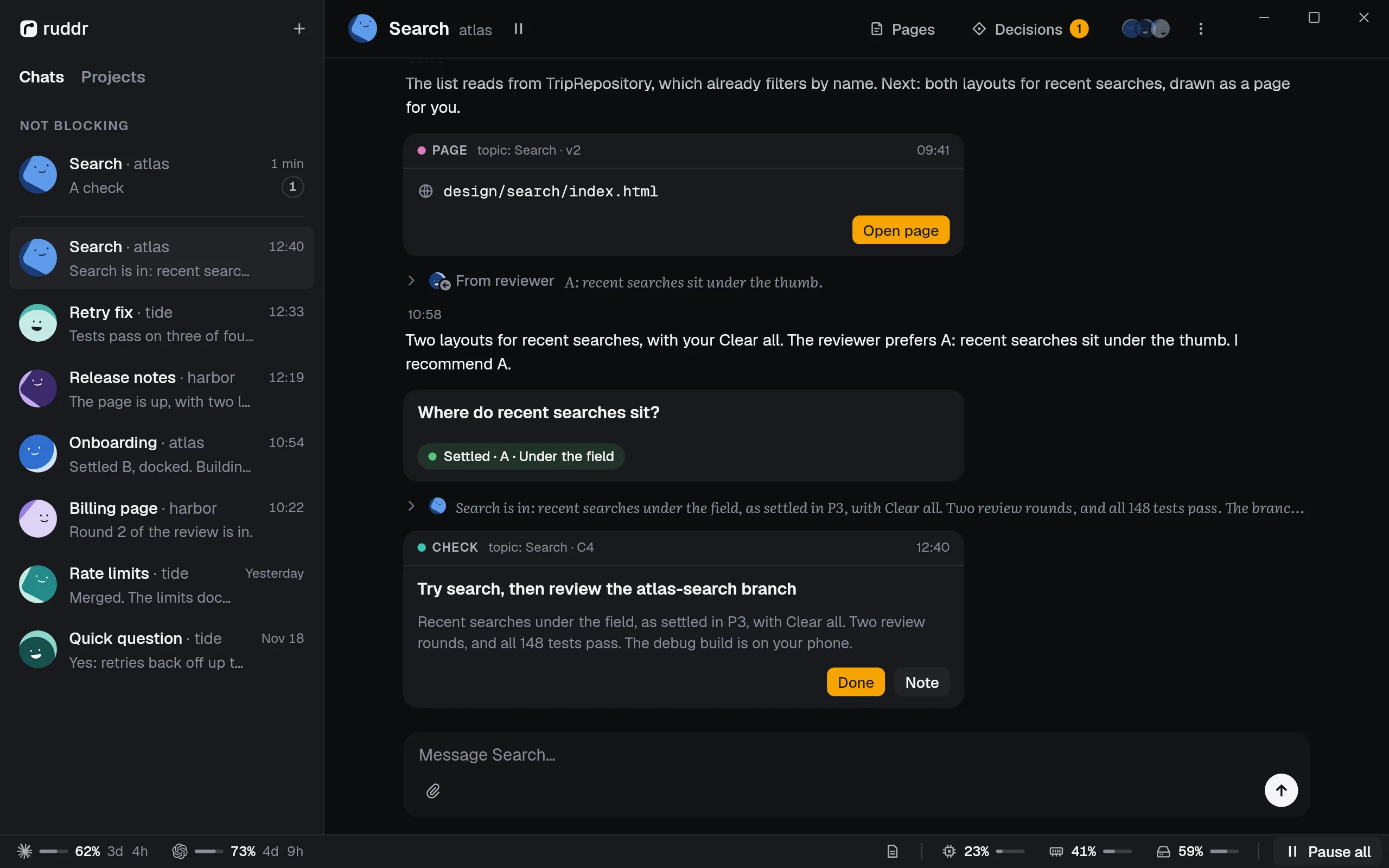
Designs, plans and reports come as pages. Pin a note on anything you see; the agent answers in its thread, and its next version answers the note. Once a page is settled, it gets built as drawn: what's left to say is what you change your mind about.
37% fewer tokens for each note on a design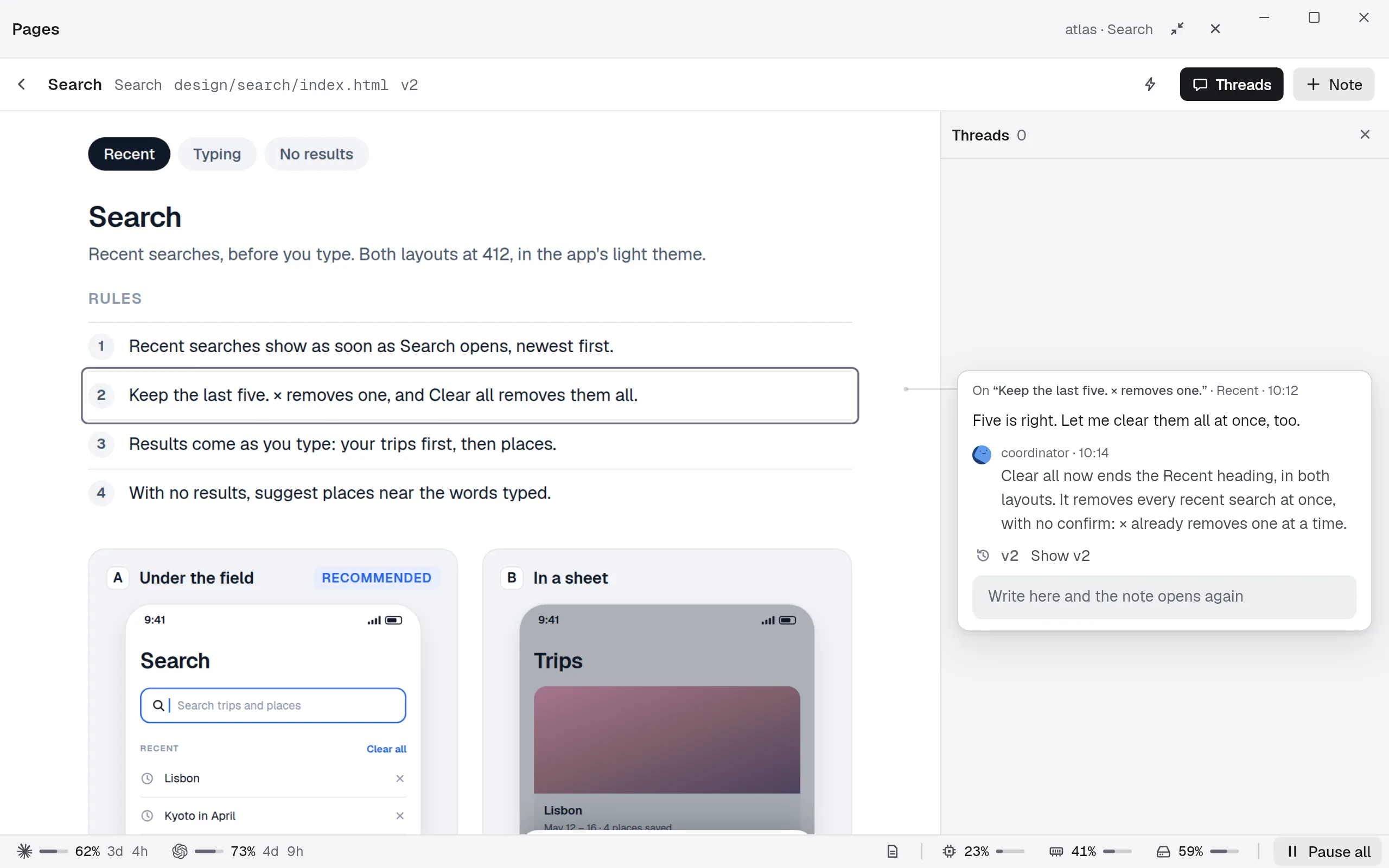
“…unstructured messages that we need to read and read again.”
A decision, when it's yours.
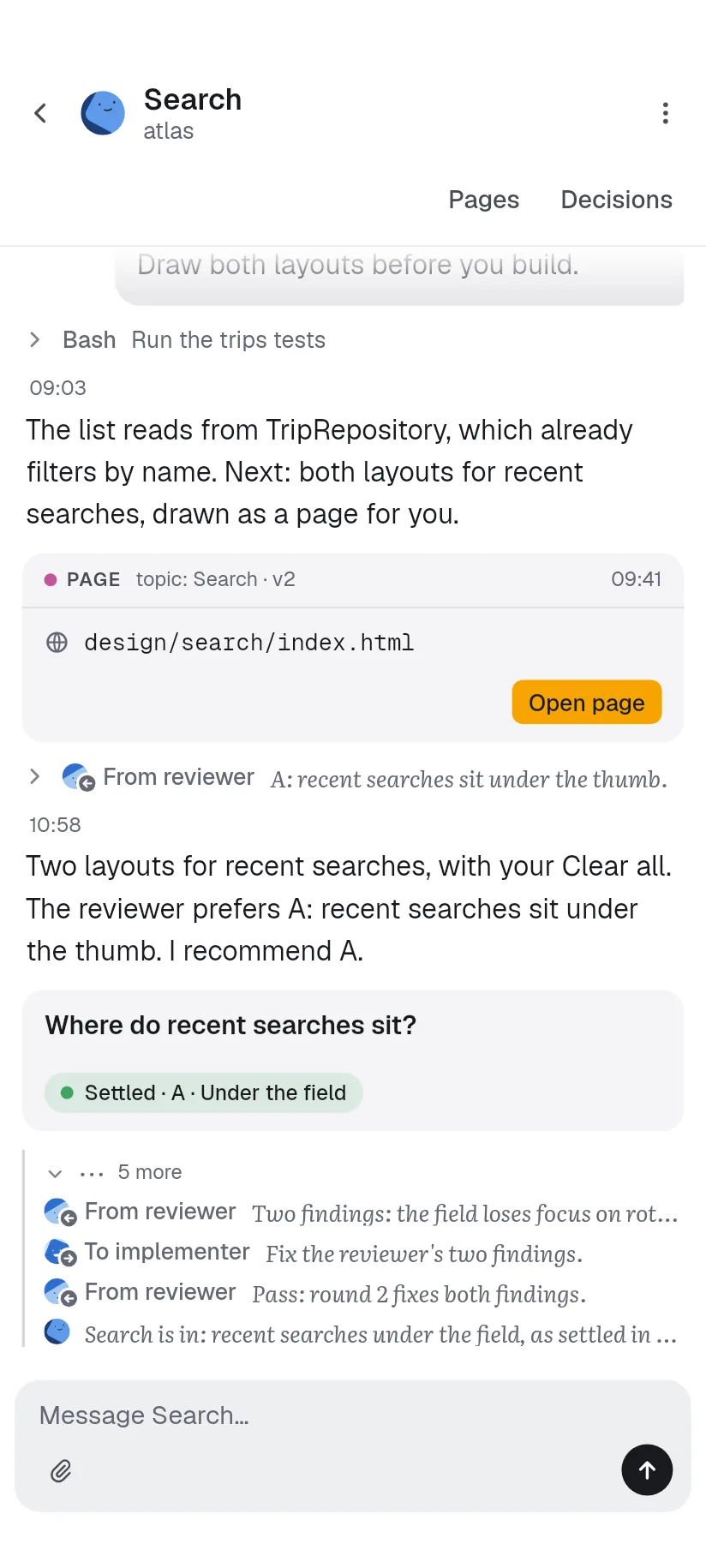
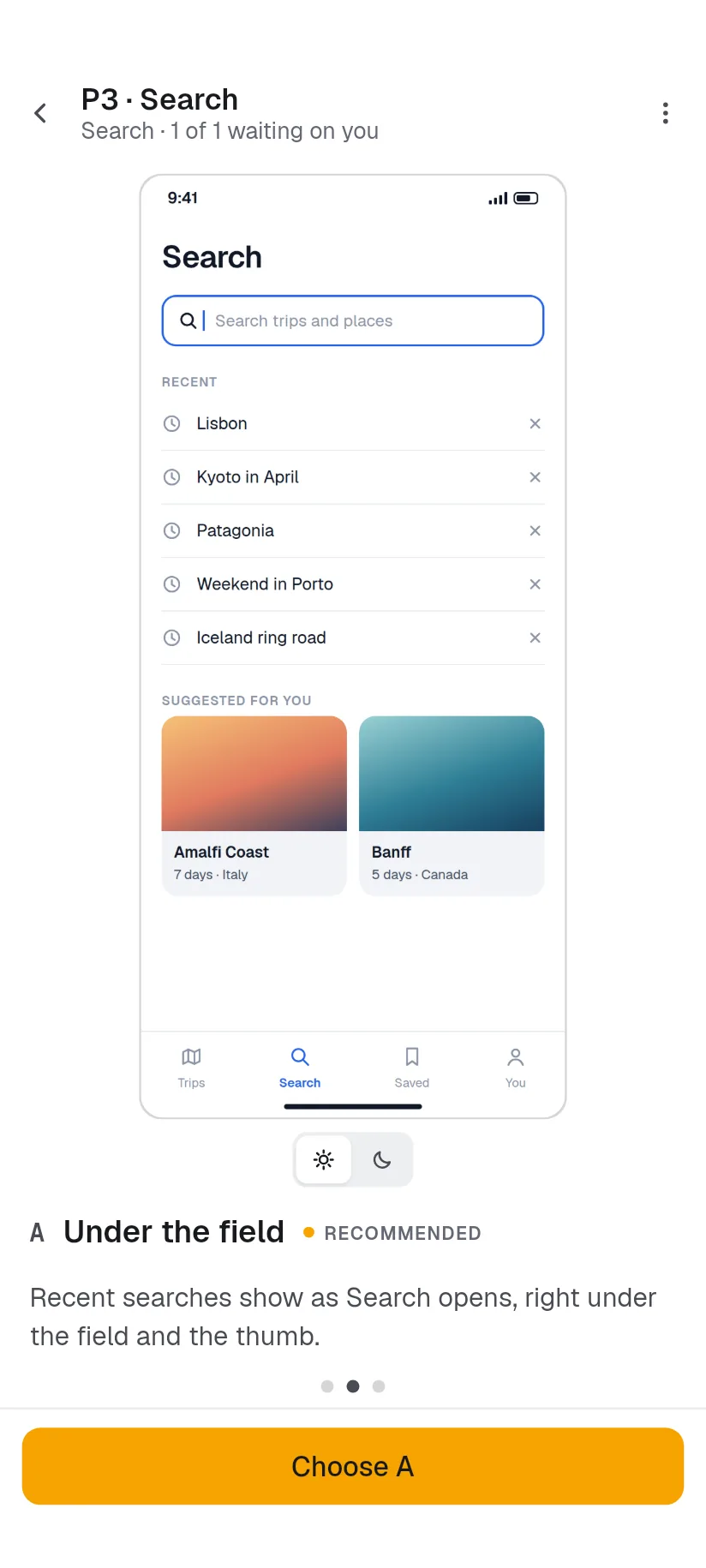
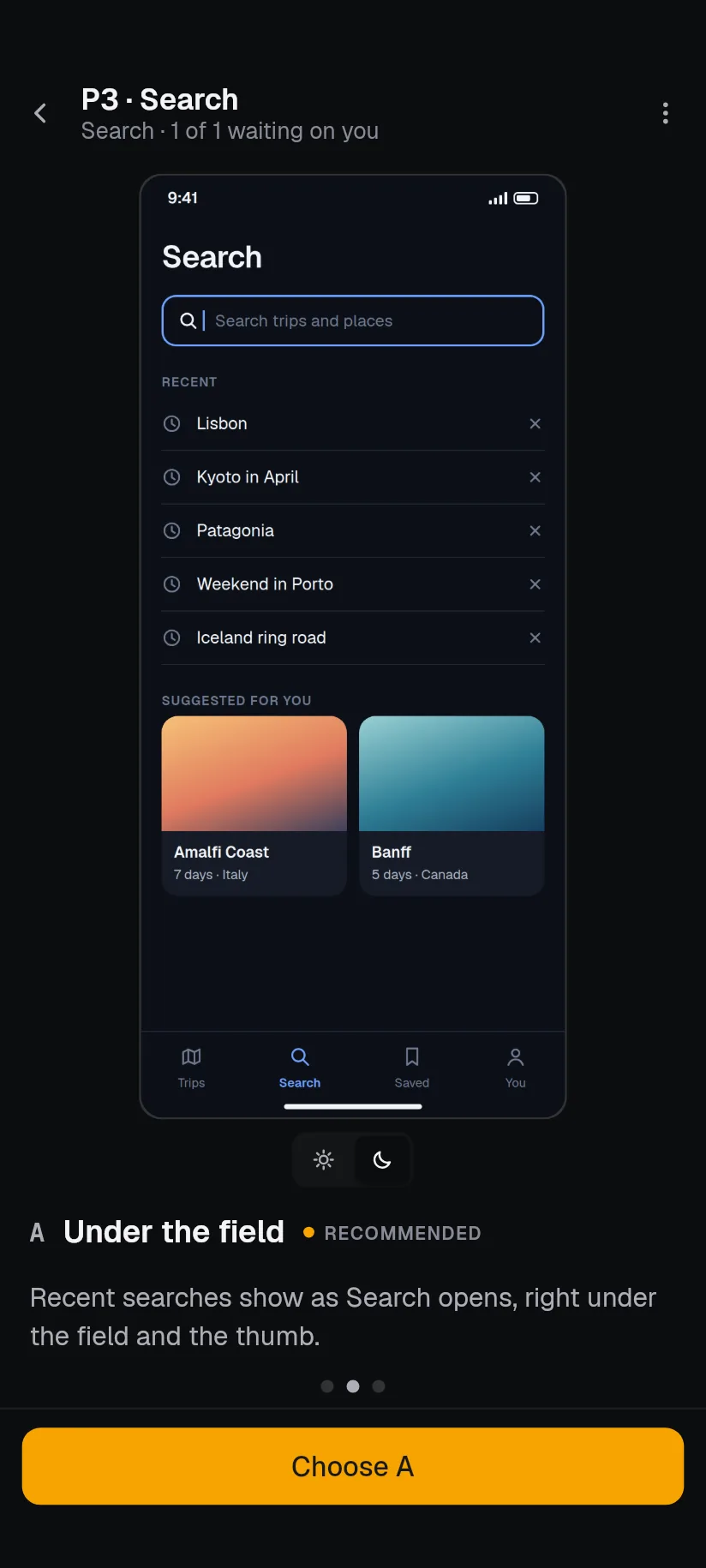
A question comes as a decision: its options side by side, with their captures and the agent's recommendation. Answer with a click, at your desk or on your phone, and the work goes on. Settled, it links the commits that built it.
85% fewer words in the chat: choices come as decisionsA chat that becomes a team.
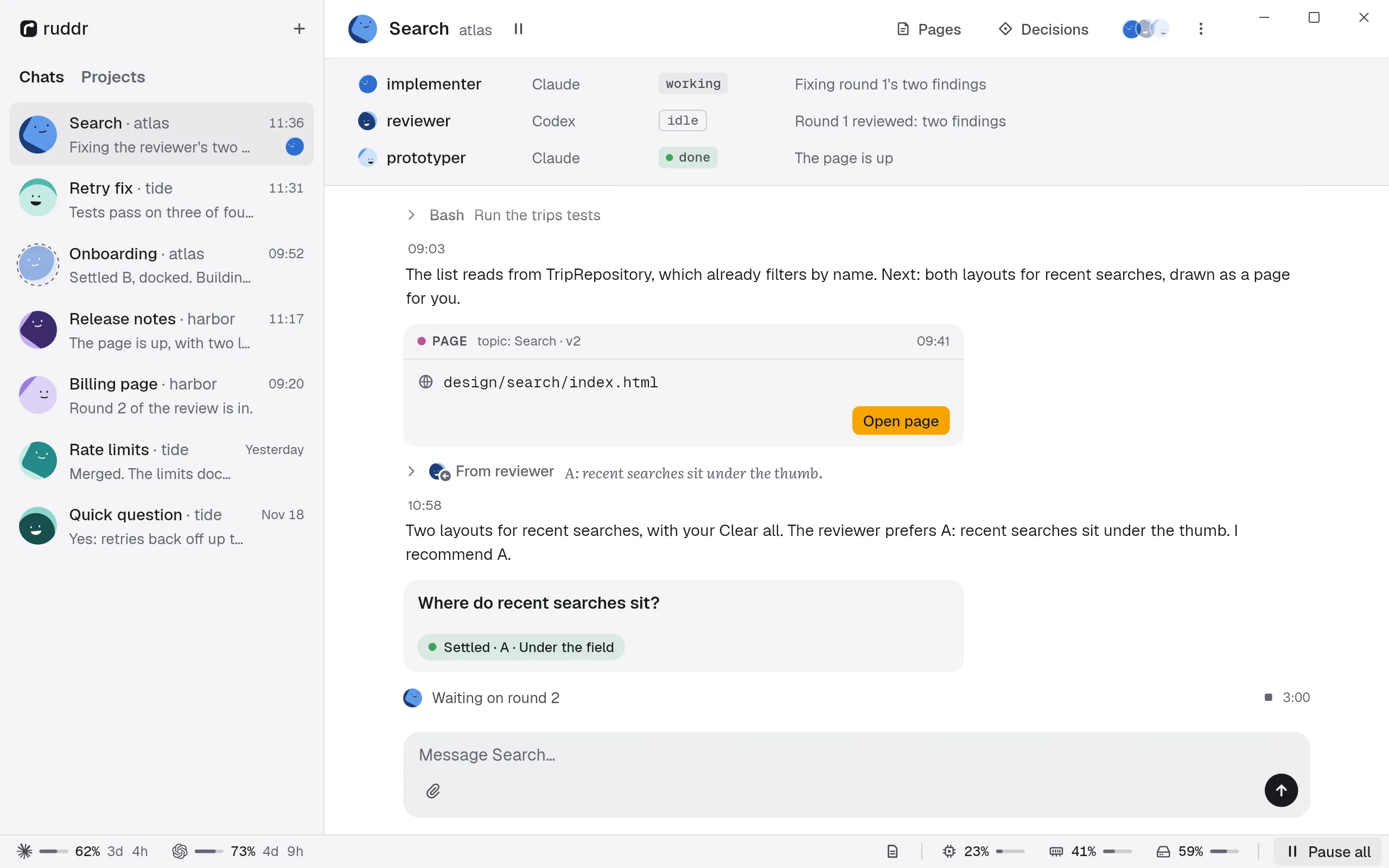
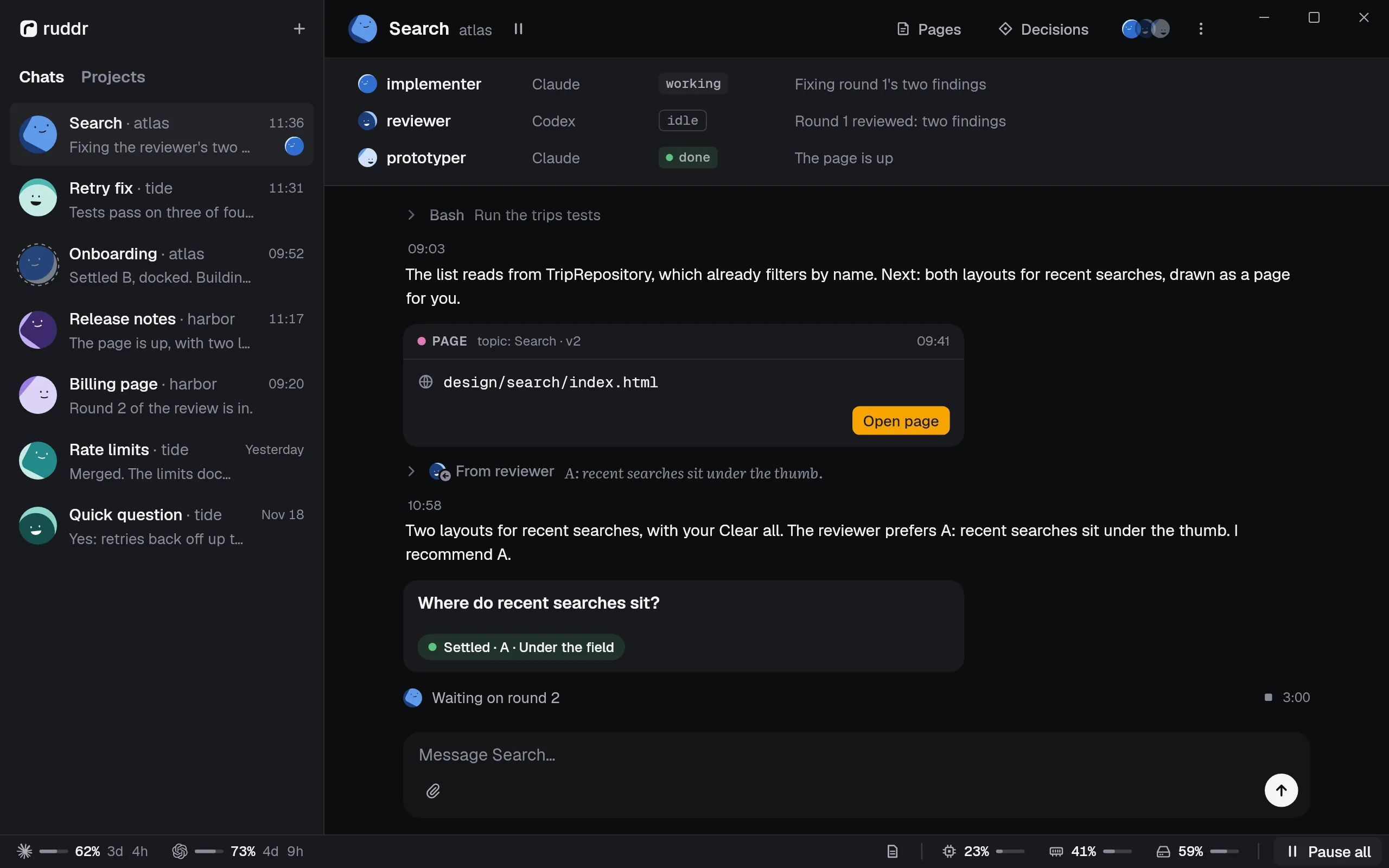
When the work needs more hands, the chat becomes a team: an implementer builds, a reviewer reviews each round, and you keep talking to the same chat. Claude Code, Codex, or both: with both, each reviews the other's work.
From the third round, a finding that repeats an earlier fix stops the work and asks you, before it spends more of your plan.
“How do you track the progress on a chat? Well, you have to ask.”
Ask and forget. Your agents won't.
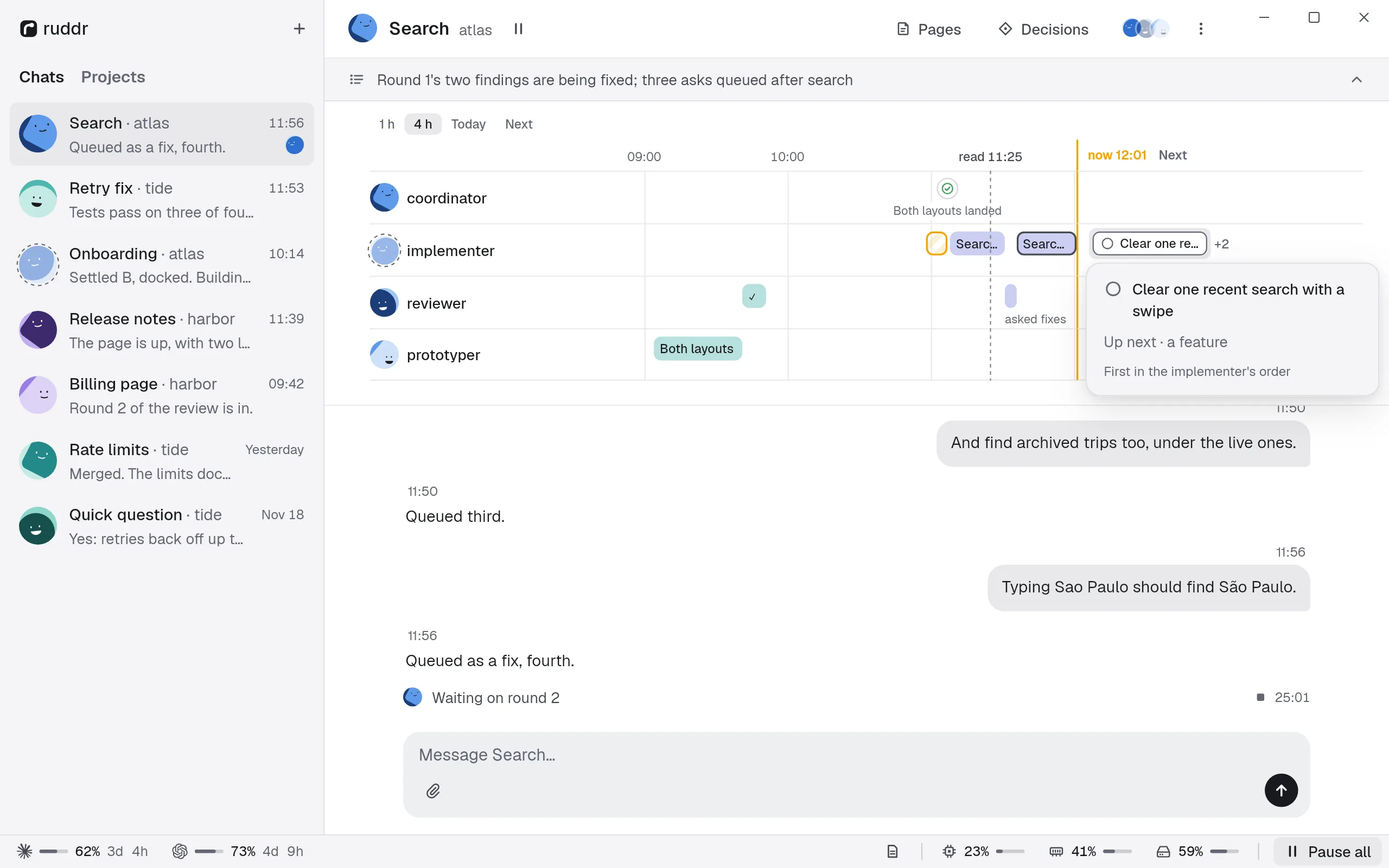
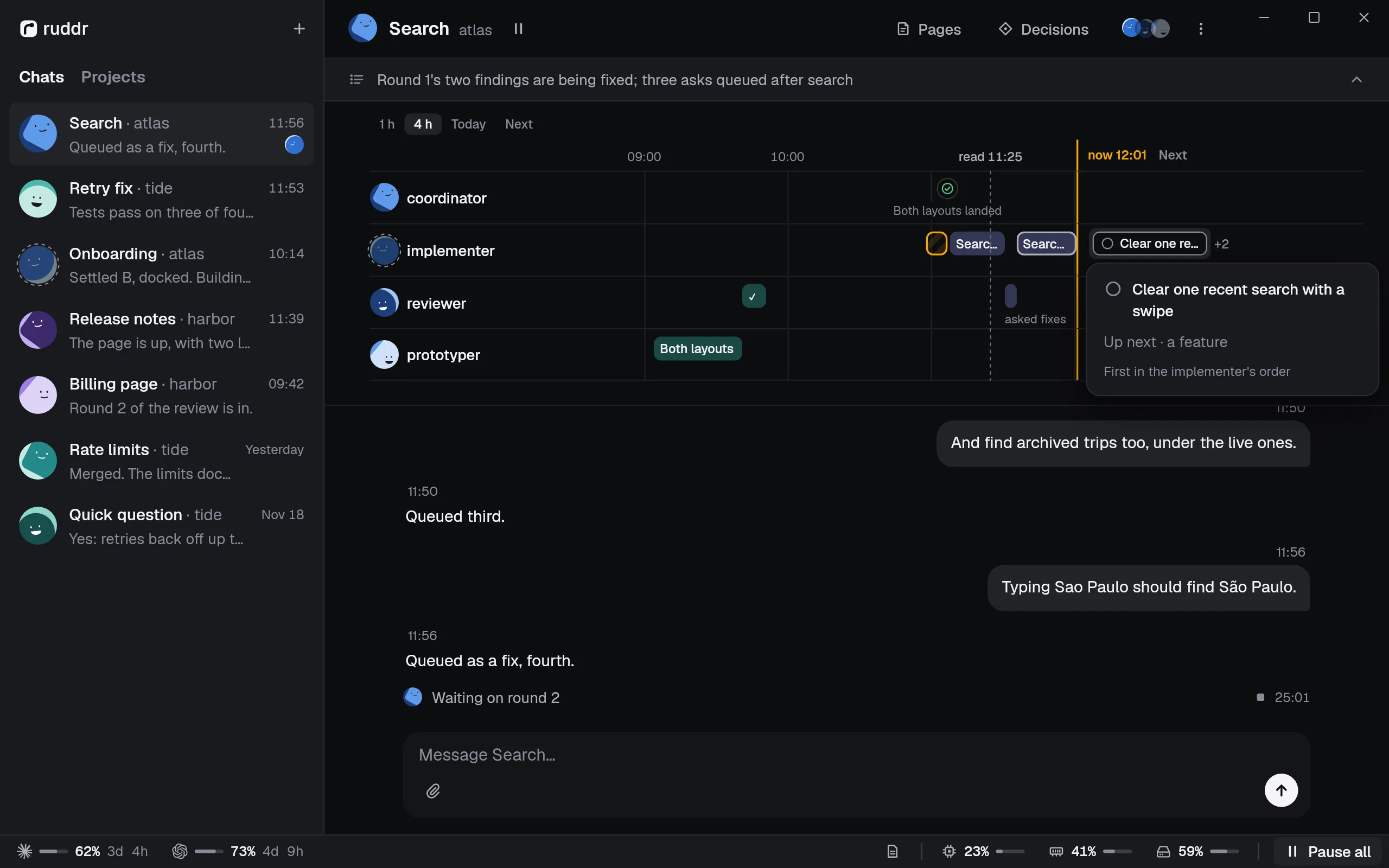
Ask for the next thing while the team is still on this one. Each ask joins a member's queue as a unit, kept by Ruddr rather than in an agent's context, so a compaction or a restart forgets none of it. Today and Next draws the day: a lane for each agent, each unit as it's built, reviewed and fixed, and what's queued after now.
An agent on its own keeps the same as a list: in progress, up next, and done until you clear it. Looking costs your agents no tokens.
Told when it's ready.
You hear from it at the end, when the work is ready for you, or when something blocks it, and not in between. Try it, then review it where it was done: the branch beside its chat, your notes on its lines.
Close to the code.
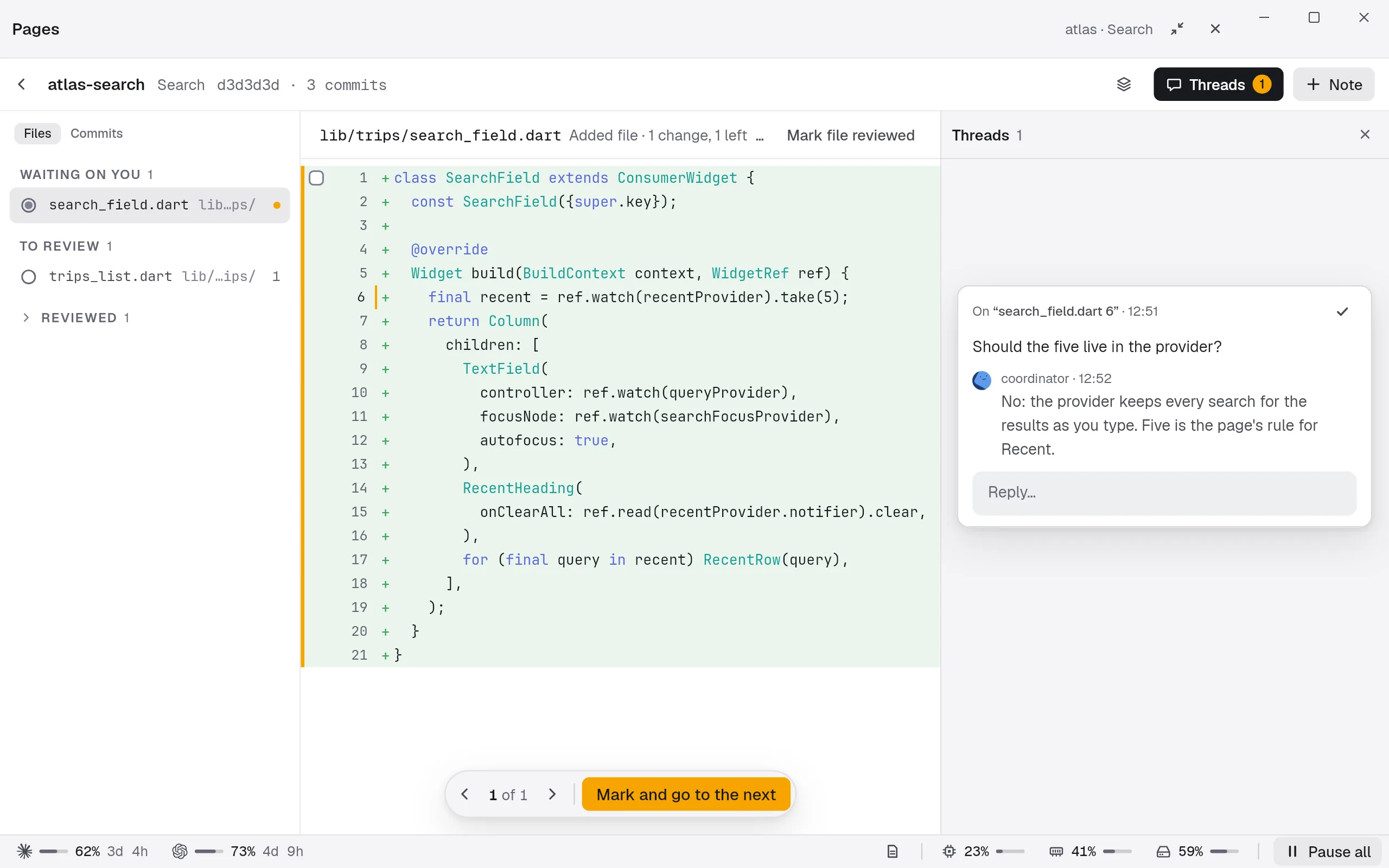
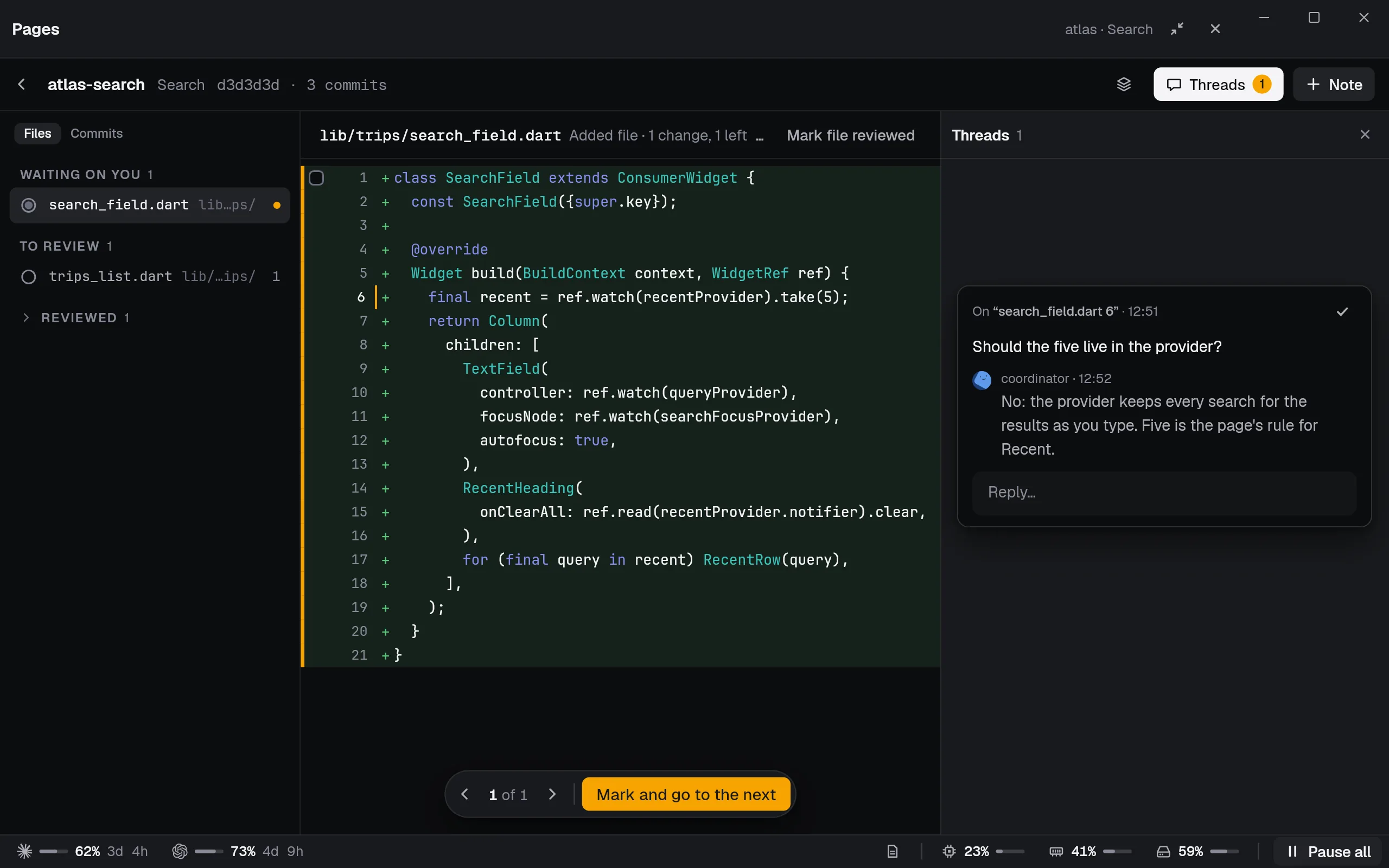
Like a terminal, and unlike a bot, Ruddr keeps you close to what your agents write. Open a chat's branch or a pull request as a review, beside its chat: its files and commits, the code highlighted, each definition a click away. A note on a line goes to the agent that wrote it, which answers in the note's thread.
A project's Code holds all its work to review, and the repository's files too, each read with its language server and open to a note on any line.
Quick, or for keeps.
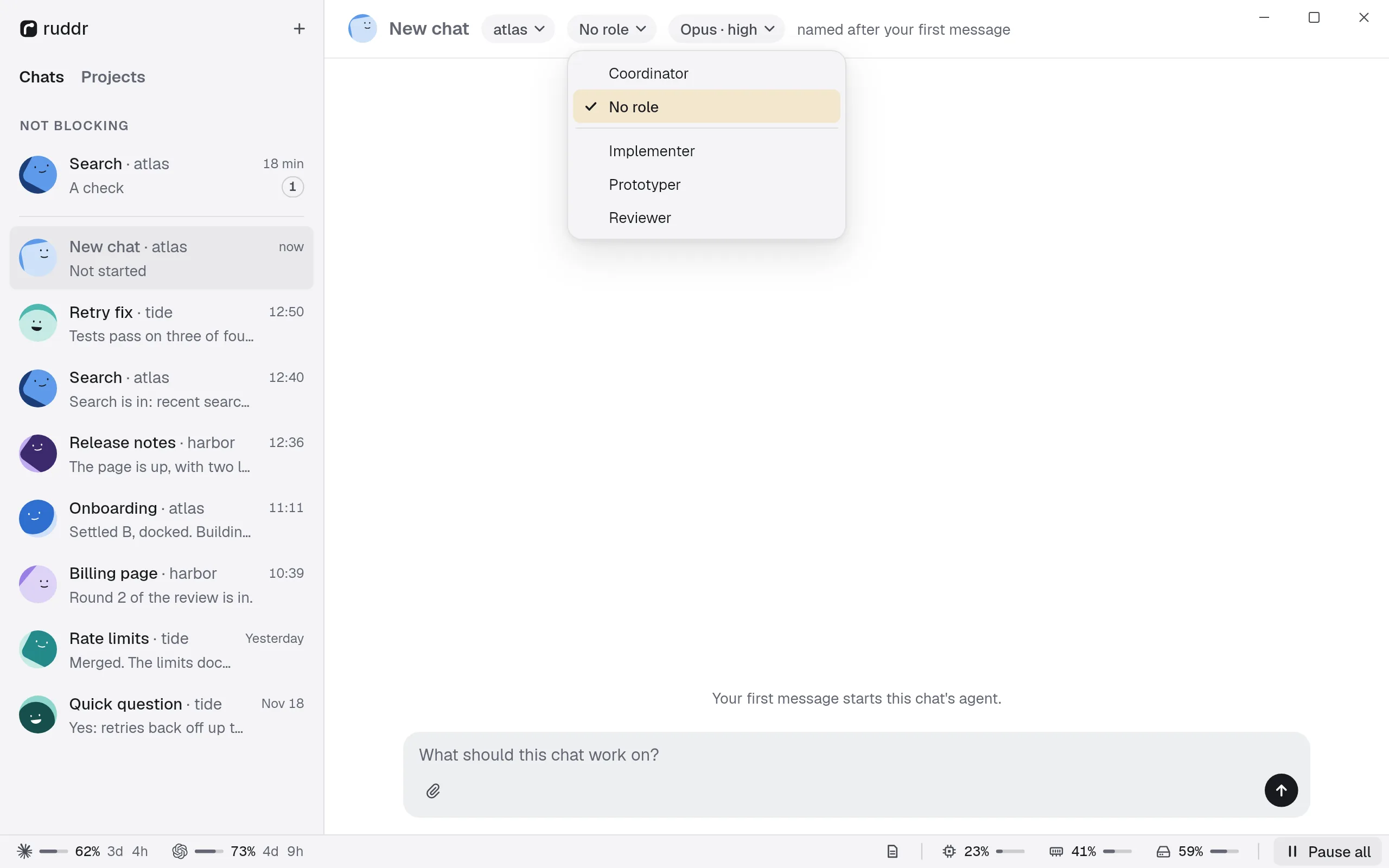
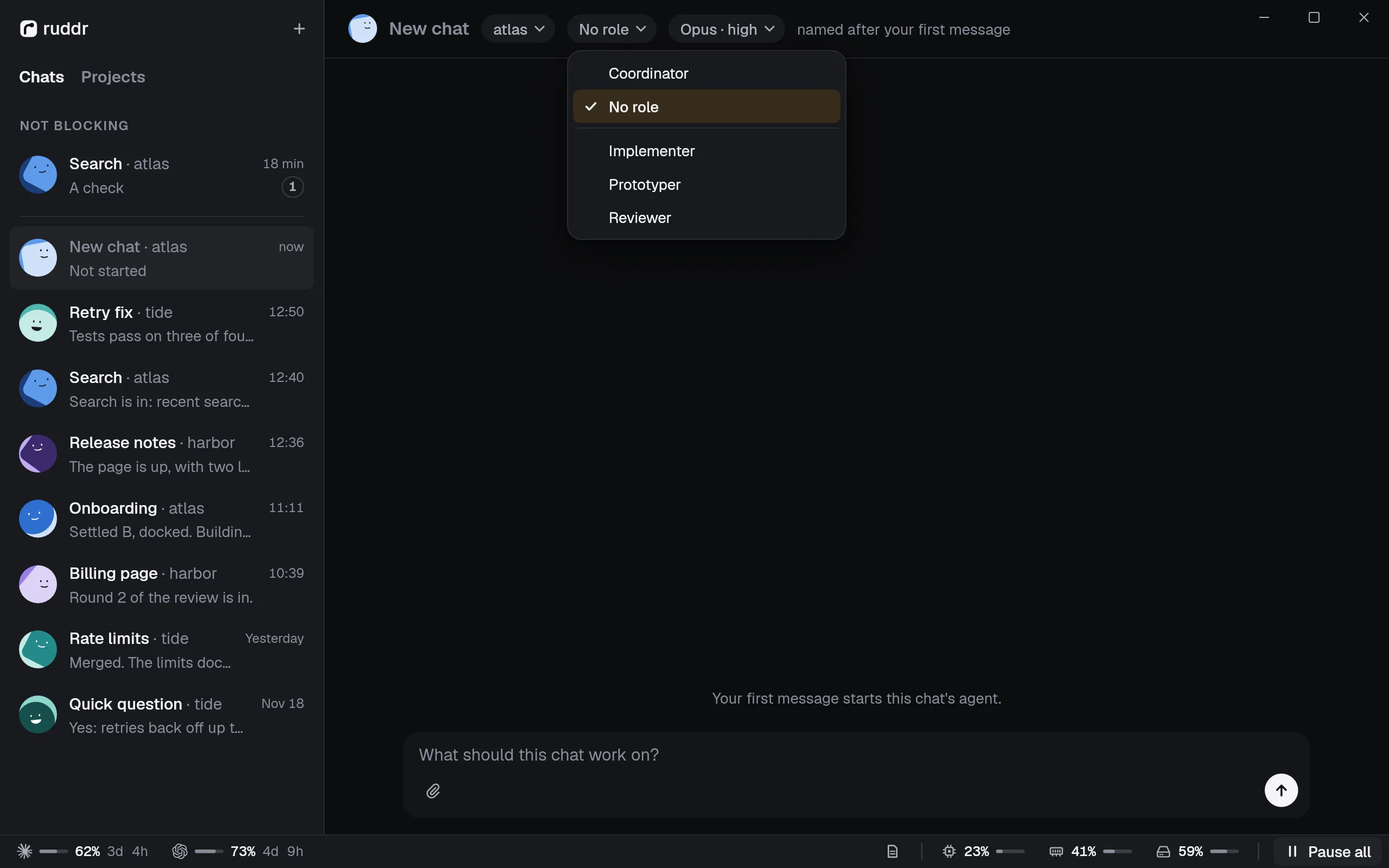
A chat can be as quick as a terminal or as lasting as a bot. Open one with no role for a question, and archive it once it's answered, as you'd close a tab. Keep a coordinator's for a whole area of work, and come back to it as you would to a bot: its state, its pages and its team are where you left them.
Claude Code or Codex, on the model and effort you choose; with a role, its own instructions.
Every project, in its place.
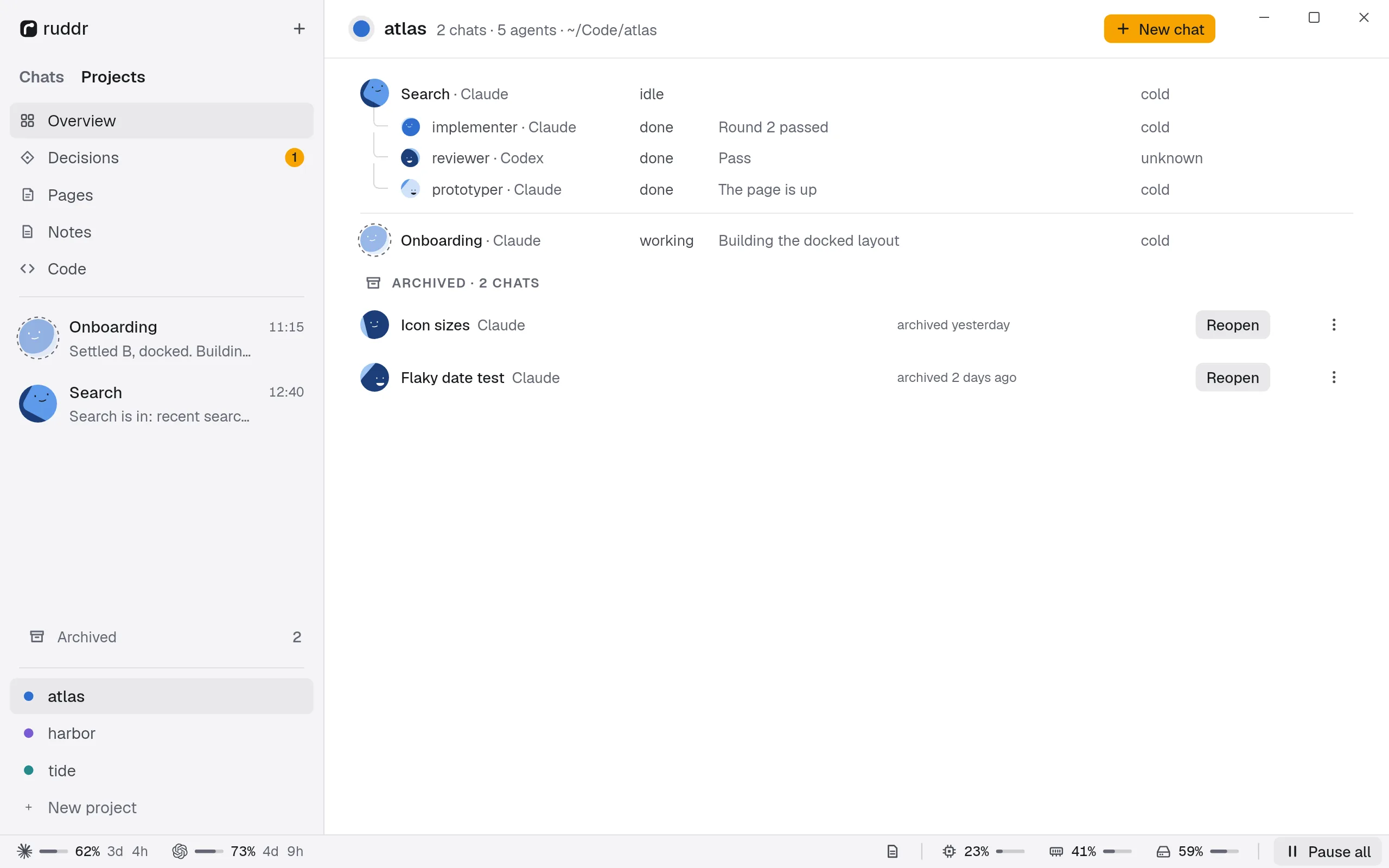
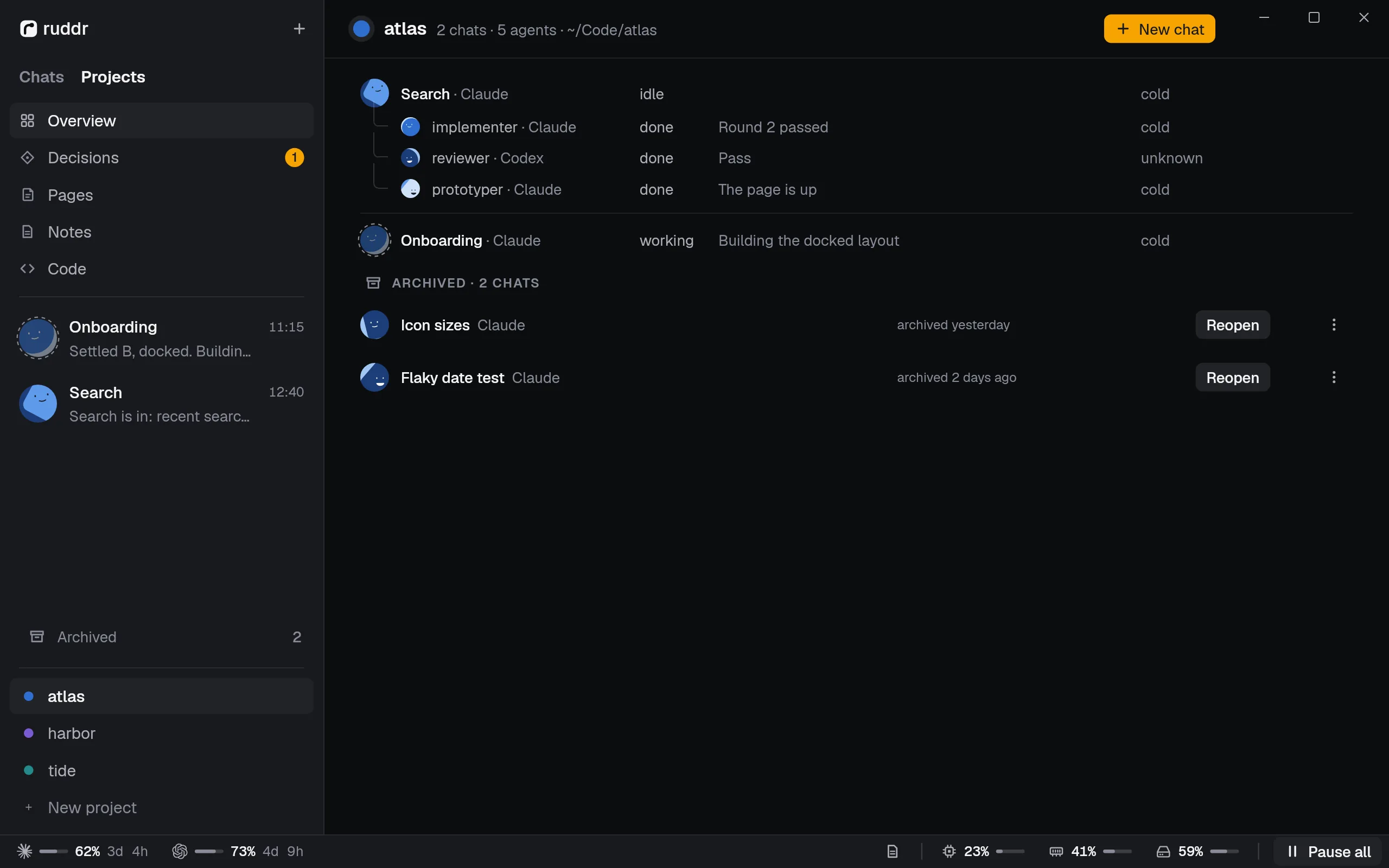
Each project keeps its chats and their teams, its decisions, pages and notes, and its Code, the work there is to review. Its overview shows every agent and where each one stands; archived chats wait at its foot, a click from coming back.
Your projects sit at the rail's foot, with a dot on any that has something for you.
All of it, on your phone.
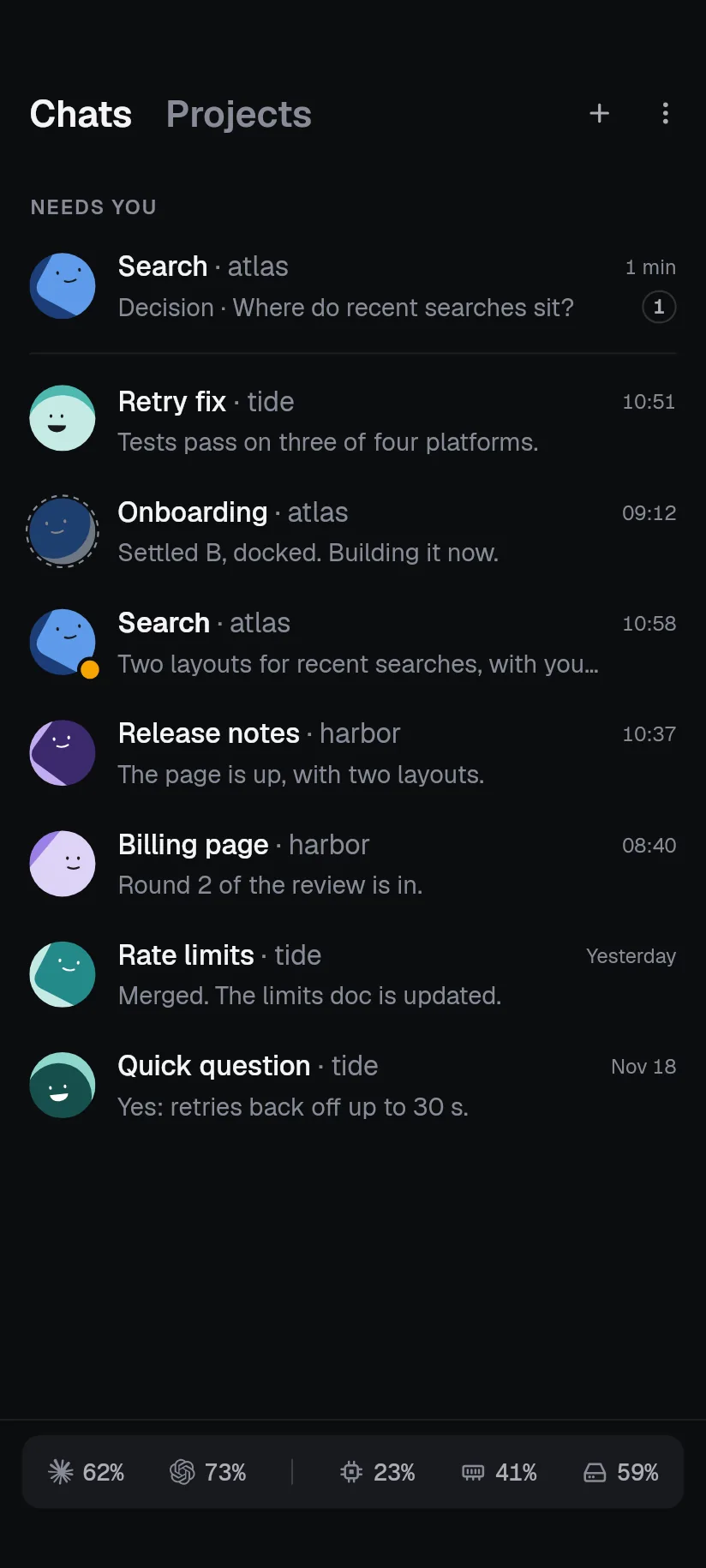
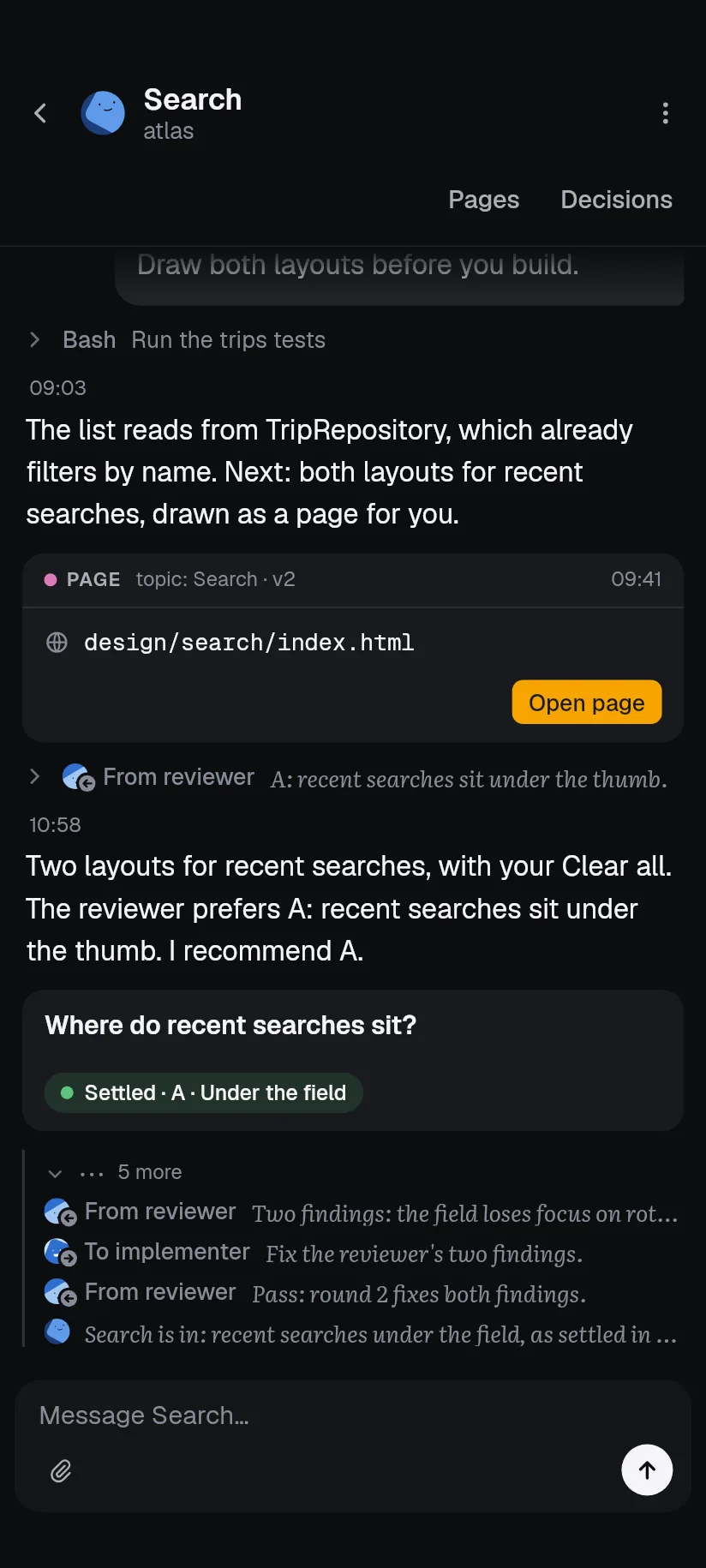
Not a companion app: everything you do at your desk, you can do on your phone, made for a small screen. Chats, decisions with their captures, pages with their notes, teams and reviews. A push says something waits, never what.
macOS, Windows with WSL and Linux at your desk; Android and iOS in your pocket.